Fundraising Ideas for Small Groups With Little or No Upfront Cost
Published August 26, 2026
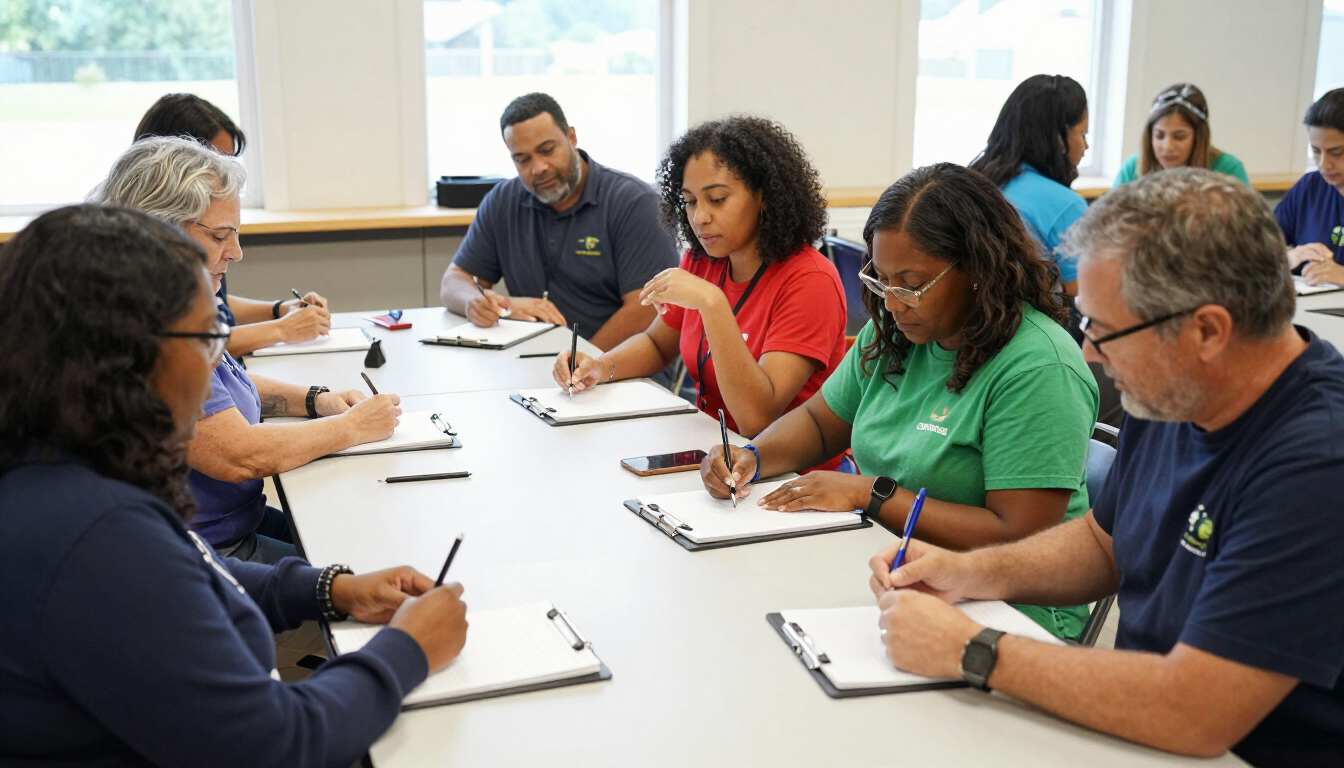
Smaller organizations and organized groups often face the same fundraising question: how do we raise money when we have a limited budget, a small group of volunteers, and a modest supporter base?
Why small groups often struggle with fundraising
A small alumni chapter, a single church ministry, a youth sports team, a booster club, a PTA committee, or a community service group may have strong commitment from a few people but limited money to spend upfront.
Many traditional fundraising ideas seem designed for larger organizations. They assume you can buy inventory in advance, reserve a venue, recruit a crowd of volunteers, and promote heavily to a large audience.
When your group does not match that model, the same ideas can feel out of reach. A fundraiser that requires a deposit you cannot afford, or a volunteer roster you do not have, can create financial stress instead of raising money.
The good news is that great fundraising doesn’t require a big budget. The key is choosing opportunities that fit what your group can realistically support.
Budget constraints don’t have to stop you
A smaller group can still run an effective fundraiser when the activity matches its resources.
You do not need an entire university behind you. You might be one alumni chapter.
You do not need an entire church participating. You might be one ministry or youth group.
And you do not need a large athletic organization. You might be one team, cheer squad, booster club, or youth program.
The goal is not to copy what a large organization does. It is to find fundraising ideas for small groups that work with the people, time, and money you actually have.
How to evaluate fundraising ideas for small groups
Before choosing any fundraiser, small groups should weigh a few practical factors. These criteria help you compare options honestly instead of picking an idea simply because it sounds popular.
Use the same questions to evaluate every opportunity you consider:
Upfront cost
How much money must your group pay before the fundraiser even begins?
Some fundraisers require deposits, inventory purchases, venue rentals, permits, or equipment. Others can be started with little or no money out of pocket.
For a small group, upfront cost is often the single most important factor. An activity that risks money you do not have can create more problems than it solves.
Number of volunteers required
How many people will you need to plan, run, and clean up the fundraiser?
A small group may only have a handful of reliable volunteers. An idea that needs a large crew for setup, registration, food service, and supervision may not be realistic.
Look for opportunities that two or three committed people can manage, or that allow supporters to help in small, flexible ways.
Time commitment
How many hours of planning and execution are involved, and over how many weeks?
Some fundraisers come together in a few days. Others require weeks of preparation, multiple meetings, and ongoing coordination.
Match the time requirement to what your volunteers can realistically give alongside work, school, family, and other responsibilities.
Supporter base
How many people are likely to participate, donate, or purchase?
A fundraiser built for a crowd will underperform if your group can only reach a few dozen supporters. Choose an idea whose scale fits the audience you can actually reach.
Promotion requirements
How much marketing will the fundraiser need to succeed?
Some activities sell themselves to a close community. Others require flyers, social media posts, email reminders, and personal outreach to draw enough participation.
Be honest about whether your group can promote the effort effectively with the time and tools available.
Financial risk
Could your group lose money if the fundraiser underperforms?
Low-cost fundraising ideas with no upfront cost carry little financial risk. Ideas that require advance purchases or deposits can leave a small group paying for unsold inventory or an empty room.
For groups with limited funds, protecting against loss matters as much as raising money.
Ease of participation
How simple is it for supporters to take part?
Easy fundraising ideas for small groups remove barriers. When supporters can give, buy, or attend without much effort, participation tends to be higher.
Potential fit for your organization
Does the fundraiser match your group’s personality, mission, and audience?
A church ministry, an athletic team, and an alumni chapter may respond to very different activities. The best fundraising ideas for small organizations are the ones your specific supporters will actually embrace.
Fundraising ideas for small groups with little or no upfront cost
The categories below include easy fundraising ideas for community groups and other small organizations. Each is evaluated against the criteria above so you can judge whether it fits your situation.
No single idea works for every group. Use these as a starting point, then narrow the list based on your volunteers, budget, and supporters.
Direct donation campaigns
A direct donation campaign asks supporters to give money toward a specific goal without selling a product or hosting an event.
Why it fits small groups: there is typically no upfront cost, no inventory, and no venue. One or two people can set up an online giving page and share the link.
Consider: how clearly you can explain what the money supports, how many supporters you can reach, and how much promotion you can do through email, text, and social media.
- Upfront cost: usually none
- Volunteers needed: one to three
- Time commitment: low to moderate
- Financial risk: very low
Peer-to-peer fundraising
Each member of your group creates a personal fundraising page and asks their own contacts to donate.
Why it fits small groups: it spreads the promotion work across several people instead of relying on one person. Many platforms let you start with no upfront cost.
Consider: whether your members are comfortable asking friends and family, and whether you can track progress simply.
- Upfront cost: often none
- Volunteers needed: each member contributes
- Time commitment: moderate over a set campaign period
- Financial risk: low
Sponsorships and local business support
Local businesses may sponsor a team, event, or program in exchange for recognition.
Why it fits small groups: a single sponsorship can provide meaningful support without requiring a large event. The work is mostly relationship-building.
Consider: whether your group can offer genuine visibility in return, and whether someone is willing to make the asks.
- Upfront cost: none
- Volunteers needed: one to two for outreach
- Time commitment: moderate
- Financial risk: low
Online product and print-on-demand sales
Some programs let your group sell products, apparel, or custom items online without buying inventory upfront. Orders are fulfilled only after they are placed.
Why it fits small groups: this can be one of the easier fundraising ideas with no upfront cost because you are not paying for stock in advance. Volunteers mainly promote the link.
Consider: how much your group actually receives per sale, shipping costs, delivery timelines, and whether the products appeal to your supporters.
- Upfront cost: often none
- Volunteers needed: one to two for promotion
- Time commitment: low
- Financial risk: low
Traditional product fundraisers
Product sales remain an option for schools, teams, churches, and clubs, but small groups should read the terms carefully.
Why it can fit: some programs offer brochures or order forms that do not require buying inventory upfront.
Consider: minimum orders, unsold inventory, how products are distributed, how much the group keeps, and how much volunteer work is involved. A simple program your group can manage well may beat a complicated one promising a larger return.
- Upfront cost: varies, sometimes none
- Volunteers needed: moderate for distribution
- Time commitment: moderate
- Financial risk: depends on the program
Community meals and food events
Food-centered events combine fundraising with a chance for supporters to gather. Ideas include community dinners, fish fries, breakfasts, and cookouts.
Why it can fit: a simple meal can be organized by a few volunteers and may appeal strongly to a close community.
Consider: food costs, venue needs, ticket pricing, attendance capacity, and promotion. A small group should start with a manageable scale and confirm what it is responsible for paying before committing.
- Upfront cost: moderate for food and supplies
- Volunteers needed: several
- Time commitment: moderate to high
- Financial risk: moderate
Activity-based fundraisers
Active groups may prefer fundraisers built around movement, such as walk-a-thons, fitness challenges, skills clinics, or community activity days.
Why it fits small groups: pledge-based activities can be scaled to the number of participants you have, and some require little upfront cost.
Consider: whether you have a location, whether the activity suits your supporters, and how you will collect pledges.
- Upfront cost: low to moderate
- Volunteers needed: a few for coordination
- Time commitment: moderate
- Financial risk: low to moderate
Family and community events
Family Fun Days, seasonal celebrations, and small community fairs can raise money while building visibility.
Why it can fit: these events can be kept simple and scaled to a small audience.
Consider: volunteer needs for setup and activities, promotion, and whether your supporter base is large enough to attend. These fundraisers can require more people than a small group has available.
- Upfront cost: varies
- Volunteers needed: several
- Time commitment: high
- Financial risk: moderate
Entertainment and social events
Game nights, talent shows, and small music events can give supporters something enjoyable in return for participating.
Why it can fit: a low-key event can be run with minimal cost when the venue is donated or inexpensive.
Consider: whether your supporters would actually attend, ticket pricing, and the volunteer effort required to run the event.
- Upfront cost: low to moderate
- Volunteers needed: several
- Time commitment: moderate to high
- Financial risk: moderate
How small groups can succeed with limited resources
Choosing the right idea is only part of the work. How you run the fundraiser matters just as much, especially when people, time, and money are tight.
These practices help small groups get better results from limited resources.
Start with a clear, specific goal
Supporters respond better when they know exactly what their money will accomplish.
State the purpose, the amount you hope to raise, and the deadline. A specific goal gives your volunteers something to talk about and gives supporters a reason to act.
Pick one fundraiser at a time
A small group can wear itself out by running several efforts at once.
Focus on one well-chosen activity, do it well, and recover before starting the next. Fewer, better-planned efforts often raise more than a constant stream of small asks.
Use the volunteers you actually have
Match tasks to the number of reliable people available. If only two people can help, choose an idea two people can run.
Let supporters contribute in small ways too, such as sharing a post, dropping off supplies, or setting up tables. Easy fundraising ideas for groups with limited volunteers spread the work instead of concentrating it.
Promote where your supporters already are
You do not need a large marketing budget. A few well-placed messages to the right people can outperform a broad campaign.
Use the channels your supporters already check, whether that is a group text, an email list, a social media group, or announcements at meetings and practices.
Keep participation easy
Every extra step a supporter must take reduces participation.
Make giving, buying, or attending as simple as possible. Share direct links, offer clear instructions, and remove unnecessary steps.
Thank your supporters
Gratitude costs nothing and encourages future support.
Thank donors, buyers, volunteers, and attendees promptly. A short message goes a long way toward keeping your supporter base engaged for the next effort.
Common challenges and how to address them
Even well-chosen fundraisers run into obstacles. Anticipating the most common ones helps a small group stay on track.
Challenge: not enough volunteers
Solution: choose fundraising ideas for groups with limited volunteers that one or two people can coordinate. Use pledge campaigns, online giving, or sponsorship outreach instead of events that need a large crew.
Challenge: no money to spend upfront
Solution: focus on no upfront cost fundraising first. Direct donations, peer-to-peer campaigns, sponsorships, and print-on-demand sales can all start without spending money in advance.
Challenge: a small supporter base
Solution: scale the fundraiser to the audience you can reach. A focused campaign aimed at a few dozen engaged supporters can outperform a broad effort aimed at no one in particular.
Challenge: limited time to plan
Solution: pick an idea with a short setup window. Online giving campaigns and simple donation drives can launch quickly, while events that need venues and permits usually cannot.
Challenge: fundraising fatigue
Solution: space out your efforts, vary the types of fundraisers you offer, and clearly explain what each one supports. Supporters who are not asked constantly are more likely to give when you do ask.
Help shape future fundraising opportunities
PartnerRaise is building a network of organizations and organized groups throughout Washington, DC, Maryland, and Virginia, and we are listening first.
We want to understand what smaller organizations and groups would actually like to participate in before developing future fundraising opportunities.
Partner Organizations can tell us:
- What types of fundraising opportunities interest them
- Which days generally work best
- Which months generally work best
- What fundraising ideas they would like PartnerRaise to explore
No cost, no obligation
There is no cost to become a Partner Organization.
Joining the PartnerRaise network does not obligate your organization or group to participate in future fundraising opportunities.
Joining also does not guarantee participation in any particular future opportunity. The goal is simple: bring organizations together, listen to what they need, and use that information to help shape future opportunities.
Key takeaways
- Great fundraising doesn’t require a big budget. The right idea is the one that fits your group’s money, volunteers, time, and supporters.
- Evaluate every fundraiser against upfront cost, volunteers, time, supporter base, promotion, risk, ease, and fit before committing.
- No upfront cost fundraising options, such as direct donations, peer-to-peer campaigns, sponsorships, and print-on-demand sales, can be strong starting points for small groups.
- Focus on one well-chosen fundraiser at a time and scale it to the audience you can realistically reach.
- There is no cost to join PartnerRaise, and joining does not obligate your group to participate in future opportunities.
Frequently asked questions
What are the best fundraising ideas for small groups with no money?
Strong starting points include direct donation campaigns, peer-to-peer fundraising, local sponsorships, and print-on-demand product sales. These fundraising ideas with no upfront cost let a small group begin without spending money in advance, then scale based on the response.
How do I choose a fundraiser when I only have a few volunteers?
Look for fundraising ideas for groups with limited volunteers that one or two people can coordinate. Online giving campaigns, sponsorship outreach, and pledge-based activities usually need fewer volunteers than events that require setup, food service, and supervision.
Are product fundraisers a good option for small organizations?
They can be, but small groups should read the terms carefully. Check for minimum orders, unsold inventory, how much the group keeps, and how much volunteer work is involved. A simple program your group can manage well may be more valuable than a complicated one promising a larger return.
How can a small group raise money without a large supporter base?
Scale the fundraiser to the audience you can actually reach. A focused campaign aimed at a few dozen engaged supporters often outperforms a broad effort. Clear goals, easy participation, and personal outreach matter more than the size of your list.
What is the easiest type of fundraiser to run?
Easy fundraising ideas for community groups typically remove barriers for supporters. Direct donation pages and online product sales with no inventory are among the simplest because they require little setup, few volunteers, and minimal upfront cost.
How do we avoid losing money on a fundraiser?
Choose low-cost fundraising ideas with little or no upfront cost, and confirm the full cost structure before agreeing to anything. Avoid programs that require large deposits or inventory purchases your group cannot afford, and start with a manageable scale.
Does joining PartnerRaise cost anything or obligate us to participate?
No. There is no cost to become a Partner Organization, and joining does not obligate your organization or group to participate in future fundraising opportunities. Joining also does not guarantee participation in any particular future opportunity.
Become a Partner Organization
There is no cost to join and no obligation to participate in future opportunities.
Become a Partner Organization